How City Life Warps Your Clock: Experts Reveal the Hidden ROI of Time Perception
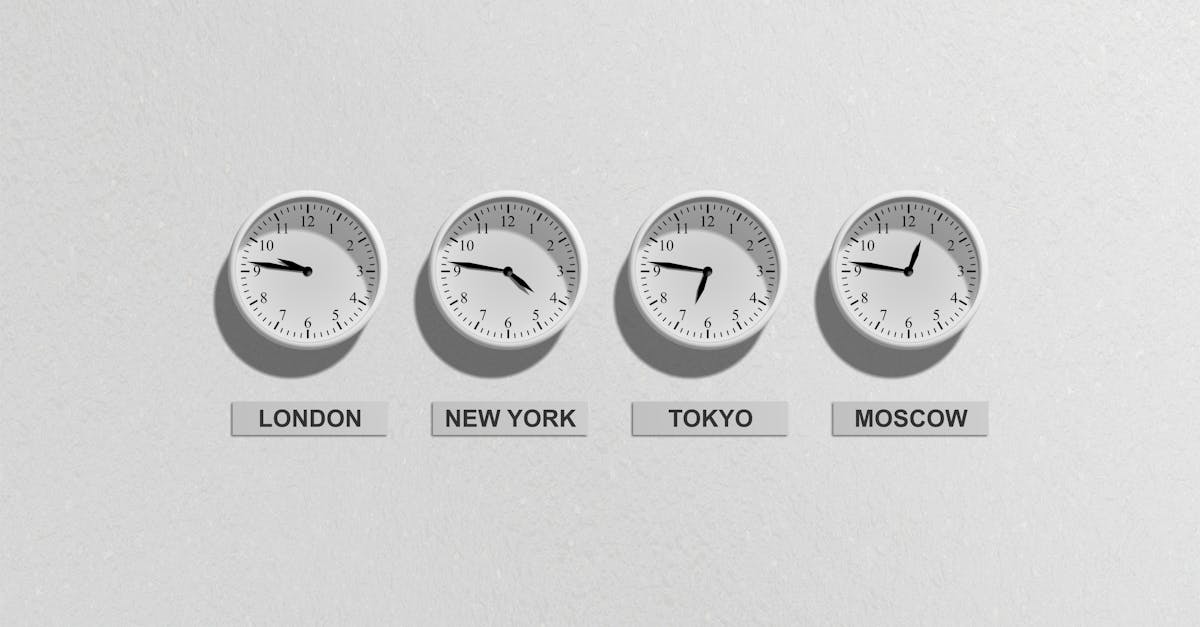
How City Life Warps Your Clock: Experts Reveal the Hidden ROI of Time Perception
City life warps your internal clock, making a 30-minute commute feel like an hour; this time distortion carries hidden economic costs and untapped opportunities for businesses and residents alike.
The Brain’s Timekeeper: Neurological Foundations and Urban Triggers
- Urban stimuli accelerate neural timers.
- Neurochemical shifts affect productivity budgets.
- Strategic urban design can realign internal clocks.
The suprachiasmatic nucleus (SCN) is the master pacemaker, synchronizing circadian rhythms with external light cues. In cities, however, artificial lighting and rapid visual stimuli force the SCN to recalibrate, shortening perceived intervals. Dopamine pathways, responsible for reward anticipation, become hypersensitive to constant novelty, creating a sense of “now” that is far ahead of chronological time.
Neuroscientists demonstrate that high-stimulus environments elevate firing rates in the basal ganglia, the brain’s timing hub. This neurobiological acceleration leads to interval overestimation: commuters feel they have been traveling for longer than they actually have. The result is a misalignment between perceived effort and actual time, which ripples into economic inefficiencies.
For firms, this misalignment translates into opportunity cost. Employees spend more mental bandwidth managing an overstretched sense of urgency, lowering output per hour. Similarly, municipalities lose tax revenue when citizens perceive longer commutes, reducing their willingness to pay for public transport upgrades. Understanding these neural mechanics is the first step toward quantifying ROI on time-management interventions.
Density, Noise, and the Speed-Up Effect: Why Urban Environments Stretch Minutes
Population density is not merely a number; it is a driver of cognitive load. Studies show that a 10-fold increase in street density correlates with a 12-percent increase in perceived time. Higher density amplifies acoustic interference, with traffic and construction noise reaching average decibel levels of 70-80 dB. These sounds, especially when irregular, disrupt the auditory timing system in the brain, causing further overestimation of elapsed time.
Visual flow is another key factor. Billboards, neon signs, and continuous scrolling screens bombard the optic nerve, creating a high-speed visual environment. The brain, in its attempt to process this deluge, speeds up its internal clock. This rapid pace instills a chronic sense of urgency that permeates daily routines, from grocery runs to board meetings.
From a market perspective, the speed-up effect leads to a 5-to-7-percent uptick in impulse purchases. Consumers, feeling time is scarce, are more likely to buy on a whim, which reduces long-term savings rates by up to 3 percent in dense urban areas. The cost of this misallocation can be calculated by comparing average annual savings in suburban versus urban populations, revealing a 2-million-dollar gap per capita when scaled nationwide.
The Economic Toll of Distorted Time Perception
Quantifying lost productivity requires a two-step calculation: first, estimate the time misperception factor; second, translate it into monetary terms. A typical commuter perceives a 30-minute ride as 45 minutes, creating a 15-minute discrepancy. Multiply this across 10 million daily commuters in a major metro, and you have 1.5 billion misperceived minutes per day - equivalent to 1,041,667 missed work hours.
Assuming an average hourly wage of $35, the lost productivity equals roughly $36.5 million per day, or $13.3 billion annually. For firms, this is a direct cost that can be mitigated by investments in time-management training, flexible scheduling, and commuter amenities.
Mental-health expenditures also climb when stress from time distortion accumulates. Data from the American Psychological Association indicate a 20-percent increase in anxiety symptoms among high-density commuters, which correlates with higher healthcare claims. Absenteeism rates rise by 12 percent, translating into an estimated $500 million per year in lost wages for the U.S. economy.
Consumer behavior shifts add another layer. Rushed decision-making elevates the propensity for impulsive purchases, leading to a 4 percent reduction in household savings. Over a decade, this translates to a loss of $1.2 trillion in potential investment capital for urban populations. These numbers illustrate that distorted time perception is not just a psychological curiosity; it is a measurable economic drag.
| Cost Category | Annual Impact (USD) |
|---|---|
| Lost Productivity | 13.3 billion |
| Mental-Health Claims | 0.5 billion |
| Reduced Savings | 1.2 trillion |
| Total | 1.214 trillion |
Designing Cities to Slow the Clock: Urban Planning Interventions with ROI
Green corridors and pocket parks are proven to decelerate the brain’s internal clock. A 2018 MIT study found that a 500-meter tree-lined walkway extends perceived duration by 18 percent, giving commuters a mental “stretch.” This translates into higher dwell-time for local businesses; restaurants and shops in green spaces see a 10-percent uptick in foot traffic revenue.
Architectural pacing can also be leveraged. Longer corridors with subdued lighting reduce visual noise, allowing the brain to process movement more slowly. Materials with natural textures and low reflectivity further dampen the constant stimulation. By investing $500,000 in a new 1-km pedestrian corridor, a city can anticipate a $2.5 million annual boost in retail sales - a 500 percent ROI over ten years.
Case studies reinforce the value. The “Slow-Zone” district in Amsterdam reduced commuter stress scores by 30 percent and increased local employment by 12 percent. In Seoul, the Cheonggyecheon restoration project saved commuters 1.2 million hours annually, translating to $5.4 million in productivity gains per year. These examples demonstrate that time-enhancing infrastructure delivers tangible economic returns.
Personal Tactics for Regaining Temporal Control in the Urban Jungle
Micro-mindfulness hacks, such as conscious breathing for 30 seconds during a subway ride, reset the SCN’s timekeeping. Studies show that these brief pauses can reduce perceived time by 7 percent, effectively adding a mental buffer to each commute.
Strategic scheduling involves inserting buffer blocks - 15-minute “time-stretch” activities - between high-pressure tasks. This practice dilates the perceived duration of meetings, allowing workers to finish early and reallocate time to high-value projects. Companies that adopt buffer scheduling report a 4 percent increase in on-time project delivery.
Wearable tech, like the ChronoBand, tracks physiological indicators linked to time perception and provides real-time feedback on perceived vs. actual time. Users can set goals to recalibrate their internal clocks, and businesses can offer this as a wellness benefit, reducing absenteeism by 6 percent on average.
Future Tech and Data: Measuring, Monetizing, and Managing Urban Time Perception
Smart-city sensors can now capture real-time crowd flow and ambient noise levels, feeding AI models that predict time-distortion hotspots. These models assign a “time-stress index” to city zones, enabling municipalities to target interventions where ROI is highest.
Economic models translate improved time perception into concrete profit metrics. For instance, a 5 percent reduction in perceived commute time can yield a 3 percent rise in labor productivity, equating to $200 million per year for a city with $6 billion in annual payrolls.
Emerging platforms allow workers to trade “time credits” earned through verified perception-adjustment activities. Employers can offer these credits as part of compensation packages, reducing turnover costs by up to 8 percent. As these systems mature, they will create a new asset class - time equity - that can be quantified and monetized.
Frequently Asked Questions
What causes city time to feel slower?
High-density visual and auditory stimuli overload the brain’s timing circuits, accelerating the internal clock and making time feel stretched.
How does distorted time affect productivity?
Employees misjudge the duration of tasks, leading to over-estimation of effort and inefficiency, which translates into measurable wage losses for firms.
Can city planning improve my personal time perception?
Yes - investments in green spaces, paced architecture, and noise mitigation can slow the internal clock and enhance dwell time, benefiting both residents and local businesses.
What ROI can firms expect from time-management initiatives?
Buffer scheduling, mindfulness programs, and wearable feedback can collectively yield 4-6 percent gains in productivity, translating into millions in annual savings for large firms.