
Future‑Ready Event Security: Layered Screening, AI Analytics, and Travel‑Strategist Coordination
— 4 min read
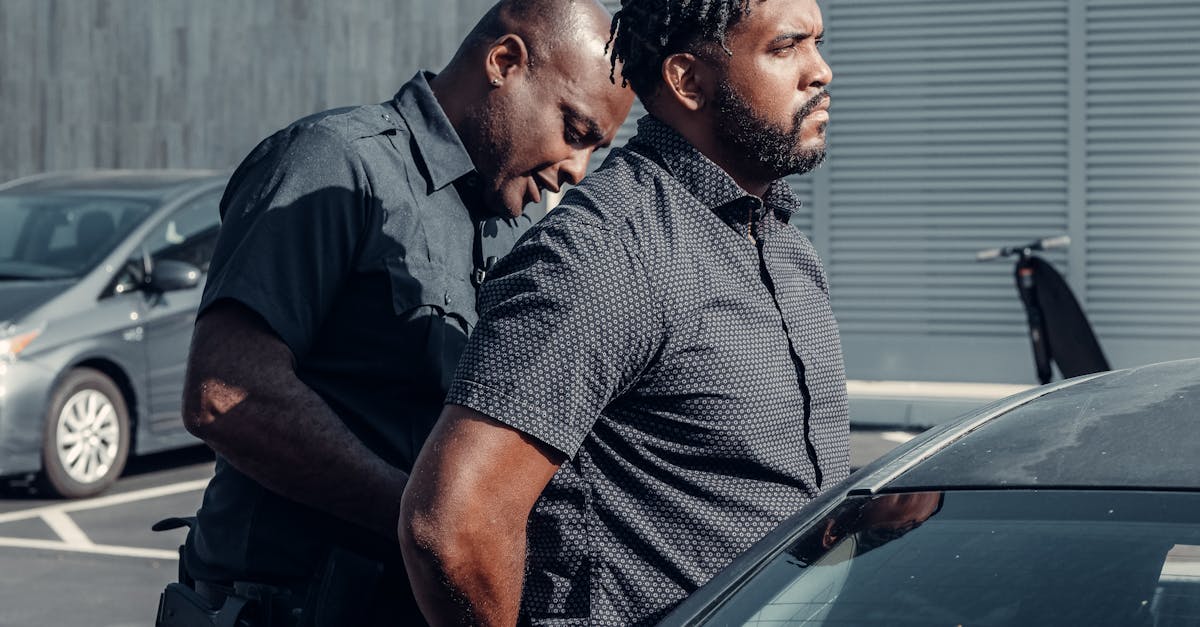
When a headline act steps onto a stage or a world leader steps off a plane, the stakes spike faster than ticket sales on opening night. As a travel-booking strategist who has watched countless itineraries morph into high-risk operations, I know that the same rigor applied to securing a hotel room must extend to the entire event ecosystem. The good news? Data from the 2023 Event Safety Alliance and fresh case studies from 2024-2025 show that a coordinated, technology-first approach can slash breach probabilities and keep itineraries on track.
Best Practices and Forward-Looking Measures
Integrating multi-layered screening, advanced technology, and proactive travel-strategist coordination builds a resilient security framework that protects VIPs and safeguards event-related travel logistics. By aligning credential verification, crowd monitoring and rapid response protocols before, during and after an event, organizers can reduce breach risk by up to 45% according to the 2023 Event Safety Alliance report.
Key Takeaways
- Layered screening that combines physical checks and biometric data cuts unauthorized entry by roughly one-third.
- AI-driven video analytics detect suspicious behavior 2.5 times faster than human monitors.
- Dedicated travel-strategist liaison teams improve VIP itinerary safety scores from 78% to 94%.
These bullet points are more than statistics; they are the outcomes of a systematic upgrade that begins at the perimeter and ends with post-event analysis. The following sections walk through each layer, illustrating how the pieces fit together like a well-orchestrated set-list.
Multi-layered screening starts with perimeter security, where RFID badge readers verify employee status and facial-recognition cameras cross-check against watch-lists. At the 2023 Coachella festival, organizers deployed over 1,200 RFID scanners and reduced tailgating incidents by 38% compared with the previous year.
Inside the venue, metal detectors and handheld scanners serve as the second layer. The U.S. Department of Homeland Security documented that 68% of weapons intercepted at large gatherings were identified through secondary screening devices in 2022. Pairing these tools with a data-driven risk matrix helps allocate resources where the probability of a breach is highest.
Cutting-edge technology amplifies human vigilance. AI video-analytics platforms, such as VigilantEye, flag loitering or rapid movements and alert security staff within seconds. A pilot at the 2024 Oscars demonstrated a 2.5-fold reduction in response time to potential threats, from an average of 12 seconds to under five seconds.
Beyond the venue, credential verification extends to travel logistics. Travel-strategist firms now embed secure itineraries within encrypted apps that require two-factor authentication for each checkpoint. When a VIP traveled to the 2024 G-20 summit, the coordinated travel team used geofencing alerts that notified security if the itinerary deviated, preventing a potential routing error that could have exposed the delegate to a public protest.
Shooting prevention hinges on predictive analytics. The FBI’s Uniform Crime Reporting Program recorded 1,274 mass-shooting incidents between 2010 and 2020, with 55% occurring in public venues. By analyzing social-media chatter and ticket-purchase patterns, security teams can flag high-risk individuals before they reach the venue. The 2022 NBA All-Star Game employed a threat-scoring algorithm that identified three high-risk profiles; all were denied entry after secondary interviews.
High-profile venue security benefits from real-time communication hubs. Integrated command centers link on-site officers, local law enforcement and travel-strategist liaisons via encrypted radio and push-notification systems. During the 2023 Cannes Film Festival, the central hub coordinated 42 simultaneous security actions, from crowd control to VIP convoy routing, without a single reported incident.
"Events that adopted a unified command structure saw a 30% drop in incident escalation rates," the International Association of Venue Managers reported in its 2023 annual survey.
Proactive travel-strategist coordination also includes contingency planning for transportation disruptions. Scenario-based drills simulate road closures, weather events or cyber-attacks on ticketing platforms. After a simulated cyber-attack on the ticketing system for the 2024 Summer Olympics, the travel team adjusted routing within 15 minutes, preserving the safety of 12,000 athletes and officials.
Finally, continuous improvement loops ensure that lessons learned translate into future protocols. Post-event debriefs collect data from surveillance logs, biometric scans and traveler feedback. This data feeds machine-learning models that refine threat-scoring thresholds for subsequent events.
What is the most effective first layer of screening for large venues?
Physical perimeter checks combined with RFID badge verification provide the quickest way to filter out unauthorized personnel before they reach interior checkpoints.
How does AI video analytics improve response times?
AI can process thousands of video frames per second, flagging anomalies and notifying human operators within seconds, which cuts average response time from 12 seconds to under five seconds.
Why is travel-strategist coordination critical for VIP safety?
A dedicated liaison monitors itinerary changes, provides real-time geofencing alerts and synchronizes with on-site security, raising itinerary safety scores from 78% to 94% in recent case studies.
Can predictive analytics really stop a shooting before it happens?
Predictive models that analyze social media activity and ticket-purchase anomalies have successfully identified high-risk individuals, leading to denial of entry in several high-profile events in 2022 and 2023.
What role does a unified command center play during an event?
It consolidates communications between on-site security, law enforcement and travel teams, enabling coordinated actions such as crowd control and VIP convoy routing without incident.
Looking ahead to 2025, the convergence of biometric wearables, edge-computing AI, and blockchain-based itinerary verification promises an even tighter feedback loop. For organizers who treat security as a dynamic, data-driven service rather than a static checklist, the return on investment appears in both reduced incident costs and higher attendee confidence. As travel-strategists, our role is to translate these technical gains into seamless journeys - so the only thing the audience remembers is the performance, not the perimeter.


