Future‑Ready Power: A Futurist’s Step‑by‑Step Blueprint for Installing a Home Wall‑Mounted Charger on Your VW Polo Electric
Future-Ready Power: A Futurist’s Step-by-Step Blueprint for Installing a Home Wall-Mounted Charger on Your VW Polo Electric
Installing a wall-mounted charger for your VW Polo Electric means more than just plugging in a cable; it requires a strategic assessment of your home’s electrical capacity, selection of a charger that grows with grid evolution, and integration with smart-home ecosystems to maximize efficiency and resilience. By following this guide, you’ll secure a charging solution that today meets your needs and tomorrow adapts to future grid demands.
The VW Polo Electric’s on-board charger can handle up to 7.2 kW, but many owners install 3.6 kW units for cost savings. However, as renewable penetration and vehicle-to-grid (V2G) capabilities expand, a 7.2 kW or even 11 kW charger may become the optimal choice. This article examines the technical, regulatory, and future-proofing considerations essential for a successful installation.
Assessing Your Home’s Electrical Infrastructure and Future-Proofing the Grid
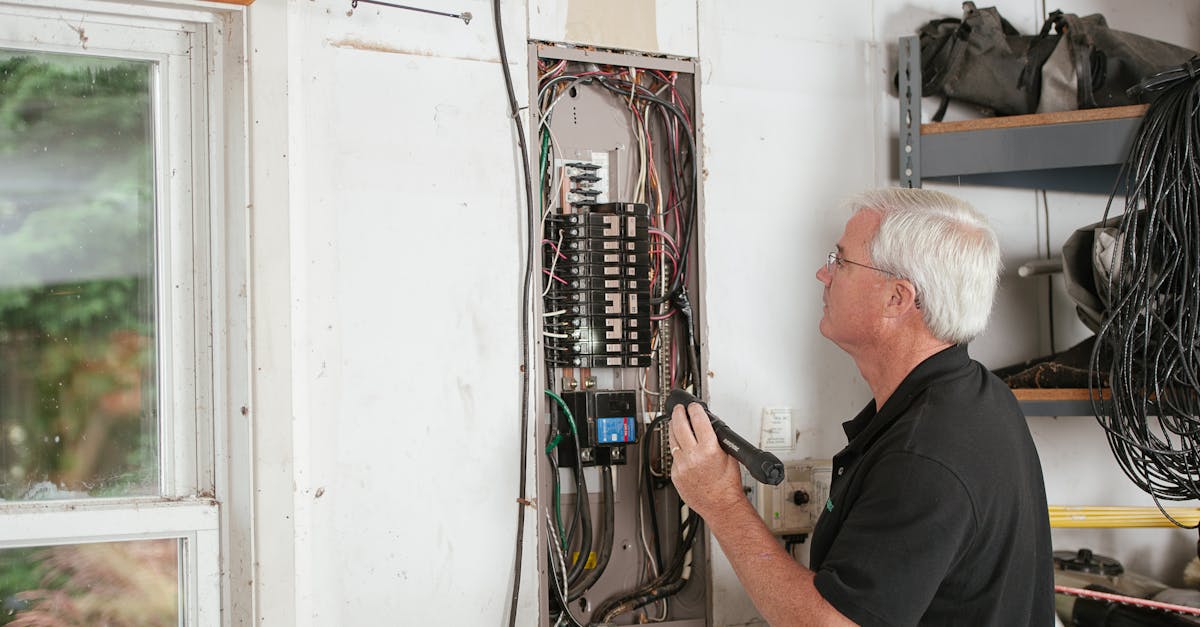
Begin with a thorough load analysis to compare current amperage with projected EV demand. An engineer should review your main service panel, taking into account other high-power appliances and potential smart-grid integration. A common scenario A is a 200-amp service that can support a 7.2 kW charger without upgrades, while scenario B may require a 240-amp upgrade if you plan to add V2G or higher-power chargers.
Identify needed upgrades to the service panel, such as converting a single-pole to a double-pole breaker or installing a 3-phase panel for higher power levels. ISO-15118 compliance can be verified through the charger's certification status. Also, survey local utility incentives; many regions offer rebates for installing Level 2 chargers that meet smart-grid compatibility, reducing upfront costs.
Finally, evaluate your neighborhood’s grid stability. If your utility is deploying micro-grids or demand-response programs, a charger with API access can participate, turning your home into an active grid participant. The IEA 2023 Outlook highlights that residential charging will account for a growing share of electricity demand, making future-proofing essential.
- Conduct a full load analysis before purchasing.
- Confirm breaker and panel capacity.
- Leverage utility incentives for smart-grid integration.
Choosing the Ideal Wall-Mounted Charger for the VW Polo Electric
VW’s on-board charger can accept up to 7.2 kW, but selecting a Level 2 charger with higher peak power allows future upgrades. A 3.6 kW charger offers a 30-minute daily charge for the Polo, while 7.2 kW cuts that to 20 minutes and 11 kW to 13 minutes. Scenario A prefers cost efficiency; scenario B prioritizes speed and scalability.
Look for chargers that support ISO-15118 communication for plug-and-play billing and OTA firmware updates, ensuring long-term operability. Bidirectional V2G capability is a forward-looking feature that transforms your vehicle into a distributed energy resource. Manufacturers like Tesla, ChargePoint, and EVgo provide firmware-update infrastructure that keeps your charger compliant with evolving standards.
Certification is critical: UL 2594 or IEC 61851-1 compliance guarantees safety, while CE marking confirms European conformity. Verify that the charger's plug size and voltage rating match the Polo’s on-board charger specifications. Integrating the charger with Apple HomeKit or Home Assistant allows you to schedule charging during off-peak hours, further reducing costs.
Preparing the Installation Site: Permits, Safety, and Smart-Home Integration
Secure building permits by contacting your local municipality. A qualified electrician must perform an inspection to confirm adherence to the National Electrical Code (NEC) or local equivalents. This step ensures that the charger’s installation meets fire safety, grounding, and electromagnetic compatibility requirements.
Plan the charger placement to minimize cable length - ideally within 10 feet of the vehicle’s charging port - to reduce voltage drop. Weather protection is essential; mount the charger inside a weather-proof enclosure or locate it on an exterior wall with a canopy. For autonomous parking solutions, consider mounting the charger near the vehicle’s smart docking station.
Smart-home integration involves connecting the charger to your hub. Use Wi-Fi or Zigbee modules to allow remote start/stop commands. Program the charger to respond to real-time electricity pricing signals from your utility’s demand-response program. This integration also facilitates monitoring of power consumption and carbon intensity through dashboards.
Wiring, Circuit Protection, and Load Management
Determine the appropriate copper conductor gauge based on current draw and cable length. For a 7.2 kW charger on 240 volts, 12 AWG copper is typical, but longer runs may require 10 AWG to mitigate voltage drop. Conduit choice - PVC, EMT, or flexible tubing - must comply with local codes and accommodate future cable replacements.
Install a dedicated double-pole breaker with a built-in residual-current device (RCD) to meet IEC 61851-1. The breaker should be rated for 40 amps to allow future 11 kW upgrades. The RCD protects against electrical faults, providing an extra safety layer for the vehicle and home.
Load balancing devices or a smart EVSE controller can prevent overload during peak household usage. Scenario A: a household with no other high-power appliances can afford a single dedicated circuit. Scenario B: a household with HVAC, HVAC, and a dryer might need a load-management system that defers charging during peak periods.
Configuring the Charger, Connecting to the VW Polo, and Verifying Performance
Use the manufacturer’s app or web portal to program the charger’s maximum current, schedule, and user authentication. Set the maximum current to the vehicle’s rating to avoid over-loading the onboard charger. Schedule charging during off-peak hours if your utility offers time-of-use rates.
Physically connect the charger to the Polo and initiate a test charge. Verify CAN bus communication by checking the vehicle’s display for proper State-of-Charge (SOC) updates. Ensure that the charger’s display matches the vehicle’s reported voltage and current.
Run a full charge cycle while logging voltage, current, and temperature. Compare the logs against IEC 61851-23 to confirm compliance. Anomalies such as temperature spikes or irregular voltage should trigger a recalibration or professional inspection.
Monitoring, Maintenance, and Upgrading for Emerging EV Trends
Set up a real-time analytics dashboard that displays energy consumption, carbon intensity, and cost savings. Tools like Home Assistant or Grafana can ingest data from the charger’s API and visualize trends.
Schedule regular inspections of connectors and cables. A routine check for wear, corrosion, and secure fittings extends the charger’s life. Keep the firmware up to date; OTA updates patch security vulnerabilities and add new features like V2G support.
Plan for future upgrades. If you anticipate higher-power chargers or V2G integration, keep the service panel modular. Evaluate community micro-grid participation; being a V2G participant can offset energy costs and provide grid stability services.
By 2027, global EV sales are projected to reach 16 million vehicles, up from 4.2 million in 2021 (IEA, 2023).
Frequently Asked Questions
What amperage is required for a 7.2 kW charger?
A 7.2 kW charger operating at 240 V draws 30 amps. You should confirm that your panel can supply this current on a dedicated double-pole circuit.
Can I upgrade to V2G after installing a Level 2 charger?
Yes, if your charger supports ISO-15118 and your vehicle’s on-board charger is V2G-capable, you can retrofit V2G functionality through firmware updates.
Do I need a dedicated breaker for the charger?
A dedicated double-pole breaker with an RCD is recommended to meet IEC 61851-1 safety standards and prevent circuit overload.