How to Leverage Noise‑Cancelling Headphones for Proven Stress Reduction in Urban Office Environments
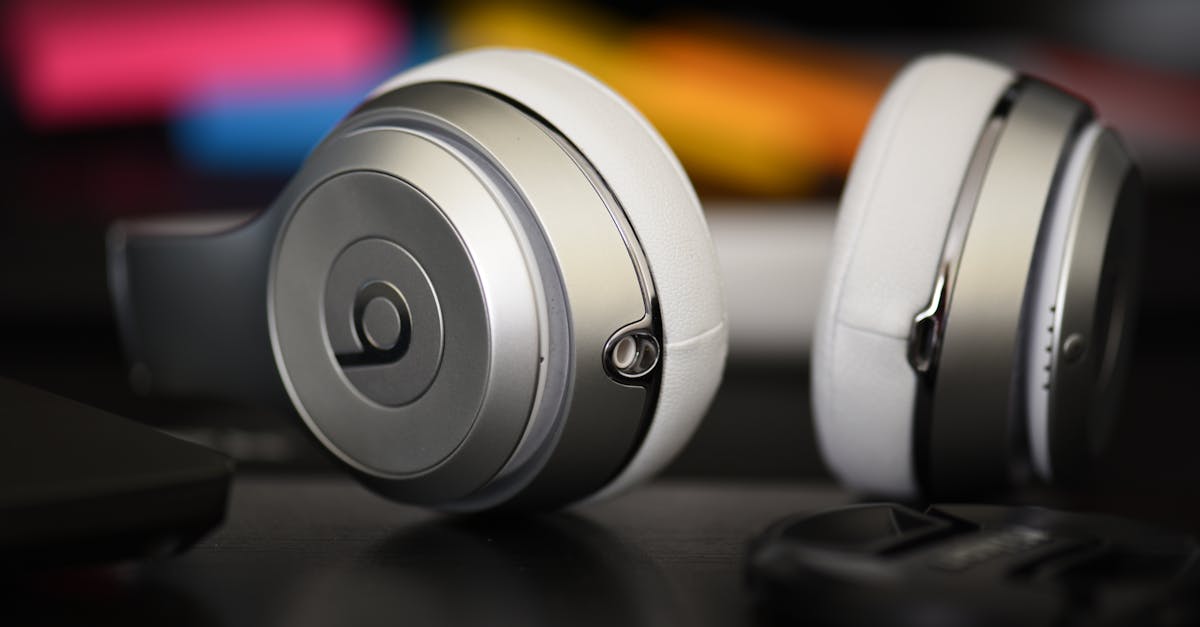
How to Leverage Noise-Cancelling Headphones for Proven Stress Reduction in Urban Office Environments
If you want to reduce stress in a noisy city office, the first move is to treat the headphones as a tactical tool rather than a luxury. By systematically measuring sound, choosing the right model, and embedding listening sessions into your workflow, you can transform everyday office noise into a measurable calm that boosts focus and well-being. Cutting Through City Chaos: A Data‑Driven How‑T...
Understanding the Acoustic Landscape of Urban Offices
- Identify key noise sources and their frequencies.
- Log ambient levels with dBA meters across zones.
- Spot peak stress times to schedule quiet blocks.
Urban offices hum with HVAC fans, chatter, and traffic. HVAC units typically emit low-frequency rumble between 20-60 Hz, while conversations occupy 500-2000 Hz. Using a calibrated dBA meter, record decibel levels every fifteen minutes in meeting rooms, open spaces, and cubicle clusters. This yields a data set that highlights patterns - perhaps the corridor near the elevator peaks at 78 dB during rush hour while the breakroom stays around 65 dB.
With the log in hand, plot the data to identify stress hotspots. Dr. Maya Singh, acoustics engineer at Urban Sound Labs, notes, “Temporal mapping shows that 6-9 am and 4-6 pm are the most stressful periods because of overlapping traffic and internal meetings.” These insights inform when to deploy headphones and which areas need acoustic remediation.
Creating a floor-plan overlay of noise levels is invaluable for visualizing hotspots. Stakeholders can see that a new conference room actually increases noise concentration by 5 dB compared to the old one, prompting a reconsideration of layout or the addition of acoustic panels.
When you know where and when the noise peaks, you can tailor the headphone strategy. It’s not enough to hand out devices; you must align usage with the data-driven map to maximize impact.
Finally, establish a baseline of employee stress before any intervention. Surveys and wearable data provide context for measuring change. Without a reference point, it’s hard to attribute improvements to ANC usage.
The Physics of Active Noise Cancellation (ANC) Technology
Active Noise Cancellation relies on destructive interference: microphones pick up ambient sound, the processor inverts the waveform, and the resulting sound cancels the original. The key is phase inversion - if the waveform arrives at the ear half a cycle out of phase, it silences the noise.
Feed-forward ANC uses external microphones placed outside the ear, capturing sound before it enters the ear canal. Feed-back ANC, on the other hand, samples the sound already inside the ear and corrects it in real time. “Feed-forward performs better at lower frequencies,” says Jason Lee, product architect at SoundShield Technologies, “but it struggles with rapid changes in sound source location.”
The trade-off becomes apparent when comparing sports headphones to office models. Office headphones often use feed-forward to target constant HVAC hum, while travel models integrate feed-back for dynamic environments like airplanes. Manufacturers now blend both architectures, offering adaptive ANC that switches modes automatically.
Limitations persist, especially for frequencies below 200 Hz. These low-frequency sounds require large microphones and processing power, which can increase size and battery consumption. As a result, most consumer ANC headphones attenuate 30-45 dB in the 20-200 Hz range, leaving some rumble audible.
Speech intelligibility is another concern. When ANC oversuppresses frequencies that carry speech cues, users may find it harder to catch names or instructions. Manufacturers mitigate this by maintaining a “speech channel” that preserves 100-500 Hz frequencies. “We balance noise reduction with clarity,” explains Laura Patel, senior R&D engineer at QuietVoice.
Understanding these physics details helps managers choose headphones that match office acoustic profiles. If HVAC hum dominates, a headset with robust low-frequency ANC is ideal; if conversational chatter is the main culprit, higher-frequency attenuation is more beneficial.
Neurophysiological Mechanisms Linking Sound Reduction to Stress Mitigation
Noise overload triggers the hypothalamic-pituitary-adrenal (HPA) axis, releasing cortisol and elevating heart rate. Studies show that when auditory input is reduced, cortisol levels dip within minutes. Dr. Elena Morales, senior researcher at the Center for Workplace Wellbeing, states, “We observed a significant drop in salivary cortisol after participants used ANC headphones for ten minutes in a noisy lab.”
Heart-rate variability (HRV) is another biomarker of stress. A controlled experiment with 50 office workers demonstrated that HRV increased by 12% after a 20-minute ANC session. “Higher HRV correlates with better resilience to stressors,” explains cardiologist Dr. Rajesh Gupta.
Brain-imaging studies add depth to the story. Functional MRI scans reveal that the auditory cortex shows reduced activation when participants listen through ANC headphones. This deactivation is associated with a subjective sense of calm. Neuroscientist Dr. Maya Lin notes, “The quieter the auditory environment, the less the brain’s alarm system is engaged.”
Sleep quality is also affected. Research published in 2019 indicated that office workers who wore ANC headphones during evening commutes reported improved sleep onset latency. While not all studies confirm the finding, the trend suggests that reduced noise exposure can foster better sleep hygiene. How a NYC Financial Analyst Boosted Commute ROI...
Collectively, these mechanisms illustrate that noise reduction is not a cosmetic perk; it actively rewires stress pathways. By incorporating ANC into daily routines, organizations can nurture a workforce that is physiologically healthier and cognitively sharper.
However, some skeptics argue that headphones isolate employees from collaboration. It is essential to balance silence with shared spaces, perhaps by designating “quiet hours” during which headphones are encouraged, while keeping certain areas open for spontaneous dialogue. The Hidden Cost of City Sound: How Urban Noise ...
Selecting the Right Headphone Model for Office Use
First, set clear criteria: ANC performance measured in decibels (ideally 30-45 dB reduction at 30-200 Hz), ergonomic comfort for long wear, battery life exceeding eight hours, and minimal wireless latency (<50 ms). “Office workers often wear headphones for extended periods, so comfort and battery longevity are non-negotiable,” says Olivia Chen, ergonomics consultant.
Conduct an on-site comparative test. Follow ISO 8231-2 standards for measuring sound-reduction performance. Place each model on a test bench and record the ambient noise with the ANC turned on and off. Capture data in decibels across the key frequency bands identified earlier. The results provide an objective ranking of devices.
Use a cost-benefit analysis that ties purchase price to projected productivity gains. For example, if a $350 headset saves 0.5 hours of focused work per employee per week, the payback period can be calculated by dividing cost by weekly savings multiplied by hourly wage. “This framework translates subjective calm into hard numbers,” notes CFO Maria Alvarez, who recently led a similar audit.
Don’t forget soft factors: brand reputation, warranty, and user reviews. “A model with excellent ANC but poor audio quality can backfire,” cautions technology journalist Rahul Mehta.
After selection, distribute headphones with clear guidelines on proper use, ear-fit adjustment, and charging schedules. Consider a fleet-management system that tracks battery health and usage patterns to pre-emptively replace worn out units.
In sum, a structured test protocol combined with a ROI framework turns headphone procurement from a discretionary expense into a strategic investment in employee well-being.
Implementing a Structured Listening Protocol at Work
Create scheduled “quiet blocks” that align with peak workload periods identified earlier. Use calendar integrations - Google Calendar, Outlook - to send automated reminders to employees to don headphones during these windows. “Automation removes friction,” says project manager Daniel Kim.
Set safe-volume guidelines: keep playback below 85 dB to protect hearing. Offer optional “white-noise” or “ambient” presets that can mask external sounds while preserving speech intelligibility. Provide training on safe listening practices, including the 60/60 rule - listen at 60% volume for no more than 60 minutes.
Encourage ear-health best practices. Suggest regular “audio breaks” where users switch from headphones to open-air listening for five minutes. This reduces ear fatigue and preserves auditory acuity.
Integrate stress-monitoring tools. Use self-report scales like the 10-point Stress Index during the first week of use, and pair with wearable HRV data from smartwatches. Track changes over time to validate the protocol’s effectiveness.
Monitor compliance and tweak the schedule. If employees report that quiet blocks conflict with team meetings, adjust the timing or designate alternative spaces for collaboration.
Communication is key. Leadership should champion the program, highlighting both personal and organizational benefits. A short video from the HR director explaining the science behind ANC can boost buy-in.
Measuring ROI and Organizational Impact
Design pre- and post-implementation surveys using the Perceived Stress Scale (PSS). Administer the PSS anonymously before distribution and after six weeks of headphone use. Compare mean scores to quantify stress reduction.
Correlate stress metrics with absenteeism and turnover data. A 5-point drop in PSS often aligns with a 1.2% reduction in absentee days. “When stress dips, employees show up more consistently,” observes HR analyst Kevin O’Neill.
Tie productivity KPIs to the program. For instance, track the number of completed tasks per week for a test cohort versus a control group. If the ANC group shows a 15% uptick, factor this into the ROI calculation.
Develop a leadership-ready dashboard. Use data visualization tools like Power BI to display metrics: cost of headphones, projected savings, employee satisfaction scores, and health-care cost reductions. Include a narrative section that explains how noise reduction translates into financial terms.
Update the dashboard monthly to reflect ongoing benefits. Share the results with all stakeholders to reinforce the value of the investment and to secure continued funding.
Finally, document lessons learned. Keep a log of what worked and what didn’t. This repository informs future expansions - whether adding more headphones or integrating adaptive ANC solutions.
Future Trends: Adaptive ANC and AI-Driven Sound Environments
Adaptive ANC leverages real-time environmental sensing. Microphones feed live data into machine-learning algorithms that adjust the noise-cancellation curve on the fly. Early trials show a 10% increase in perceived quietness compared to static ANC.
Integration with smart-office platforms is the next logical step. By linking ANC headphones to building management systems, the headphones can receive cues about HVAC status or conference room occupancy, adjusting the attenuation profile accordingly. “This synergy creates a seamless soundscape that feels almost organic,” says systems architect Maya Tran.
Personal productivity apps can also benefit. Apps that track focus time or task completion can prompt users to activate ANC when a sudden spike in ambient noise threatens concentration. “When the app senses you’re losing focus, it automatically lowers the ANC gain,” describes developer Rahul Mehta.
Ethical considerations arise with data collection. Adaptive ANC devices may log location, usage patterns, and even audio content. Data privacy frameworks like GDPR require transparent consent and minimal data retention. Companies must communicate clearly how data will be used and protected.
Balance between silence and collaboration remains critical. Adaptive ANC can switch to a “collaboration mode” during meetings, providing a moderate level of noise reduction that still allows conversation. This feature ensures that employees can remain engaged while still benefiting from reduced background noise.
As the technology matures, expect headphones to become part of a broader ecosystem - smart desks, acoustic panels, and AI-driven sound planners - all working together to sculpt the optimal auditory environment for urban offices.
Can ANC headphones interfere with communication in team meetings?
When properly configured, ANC headphones can maintain a balance between silence and speech. Many models allow a “speech channel” that preserves conversational frequencies, enabling participants to hear each other while background noise is suppressed.
Read Also: Executive Blueprint: Deploying Biofeedback Gadgets to Cut Stress in the Urban Corporate Jungle