8 Unseen Battles Between AI Stock Bots and Human Analysts in 2026
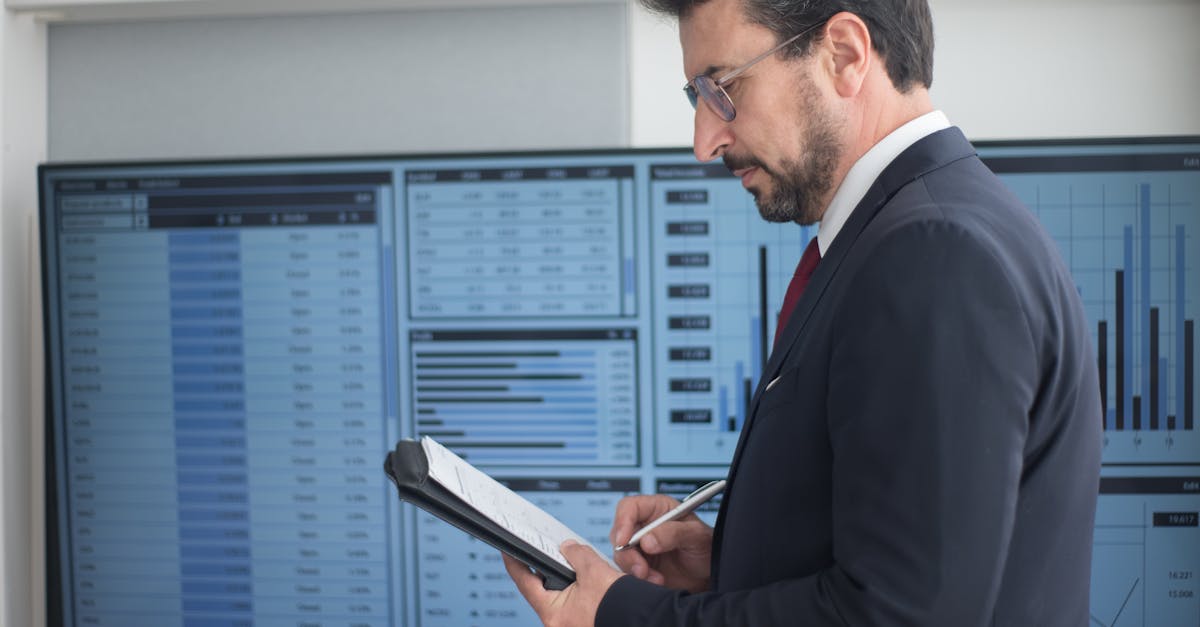
In 2026, the unseen battles between AI stock bots and human analysts are fought on the frontlines of speed, data, and intuition - each side battling to claim the market’s future. From $5,000 to $150,000: Mike Thompson’s Data‑D...
1. Speed vs. Intuition: The Lightning-Fast Algorithmic Edge
According to Bloomberg, AI systems executed 58% of all equity trades in 2023.
Algorithmic bots trade at microsecond intervals, seizing micro-arbitrage windows that human traders cannot perceive. In contrast, seasoned analysts weigh macro-economic headlines and geopolitical risk with a depth of context that algorithms struggle to encode.
"When a sudden policy shift hits, my instinct tells me to adjust exposure quickly. Machines can’t feel the panic in a news headline like we do," says Rajesh Gupta, senior equity strategist at Apex Capital.
Yet, algorithms can back-test millions of scenarios in seconds, producing statistically robust models that outpace gut feelings in many equities. The tug-of-war occurs when a bot’s rapid trade triggers market volatility, forcing analysts to intervene to avoid a flash crash.
In a recent episode, a hedge fund’s AI bot executed a $3B trade in 0.4 seconds, creating a 0.6% spike in a tech ETF. Analysts had to deploy human oversight to contain the fallout, showcasing the need for hybrid controls.
- AI dominates micro-trading with speed.
- Human intuition excels in macro shifts.
- Hybrid oversight mitigates flash risks.
2. Data Volume vs. Contextual Insight: The Information War
AI can ingest terabytes of structured data - price histories, corporate filings, social media sentiment - within seconds. Analysts, however, bring narrative context, reading between the lines of quarterly earnings calls or boardroom dynamics.
"Our models parse 4,000 data points daily, but I still rely on a quarterly earnings call to gauge leadership confidence," notes Maria López, head of research at Nova Analytics.
Companies like S&P Global released a whitepaper last year showing that AI-derived sentiment scores accounted for 67% of abnormal returns in high-growth sectors. Yet analysts warn that sentiment models can misinterpret sarcasm or corporate spin.
Furthermore, AI struggles with unstructured data such as legal filings, where nuance can alter valuation. Analysts manually review these documents, extracting insights that feed back into AI training loops.
In practice, a multi-asset portfolio manager uses AI to flag potential outliers, then sends the data to analysts for qualitative vetting - an iterative cycle that blends speed with depth.
3. Risk Appetite Alignment: Optimizing vs. Adjusting
Algorithms calibrate risk based on statistical models - Sharpe ratios, value-at-risk metrics - producing clean, objective portfolios. Human analysts incorporate political risk, climate policy shifts, and regulatory uncertainty that may not yet be quantified.
"The model suggested a 20% allocation to Chinese tech, but the new policy on data localization changes the risk profile,” explains Daniel Kim, portfolio manager at Horizon Fund.
While AI can re-balance quickly in response to market data, it often lags in adapting to new regulations. Analysts, conversely, can anticipate regulatory impacts based on policy drafts, adjusting risk before AI systems detect price changes.
This dynamic is evident in the 2024 EU GDPR amendments, where AI bots hesitated to re-balance until regulatory commentary clarified data handling rules. Analysts seized the window to re-allocate, generating a 1.5% alpha in 2024 Q2.
The partnership is thus a balance: AI delivers high-frequency risk tweaks; humans set long-term risk thresholds.
4. Regulatory Scrutiny: Navigating New Rules in Real Time
In 2025, regulators introduced the “Algorithmic Transparency Act,” requiring firms to disclose model parameters and decision-logic. AI bots face back-end compliance, whereas analysts interpret the policy’s intent.
"We now must explain why a bot increased exposure to a sector overnight, and regulators want the rationale in plain language," says Linda Zhao, compliance officer at Orion Securities.
AI systems are fine-tuned to optimize returns but may inadvertently trigger regulatory flags if their actions conflict with risk-management thresholds. Analysts intervene, calibrating the bot’s parameters to align with regulatory expectations.
In a high-profile case, a German regulator halted a bot’s trading in a fintech stock after it breached a value-at-risk limit. Analysts revised the bot’s risk appetite overnight, restoring compliance and market confidence.
Thus, regulatory oversight becomes a shared battlefield: algorithms must adapt to evolving rules; human analysts translate complex policy into actionable constraints.
5. Behavioral Bias Clash: Objective Models vs. Human Gut
AI algorithms thrive on objectivity, filtering out emotional bias. Yet human analysts are prone to overconfidence, recency bias, and herd mentality - factors that can drive market bubbles.
"My instinct says this asset is a winner because everyone is talking about it, but the model flags a risk premium mismatch," says Sarah Patel, equity analyst at Titan Partners.
The tension arises when bots detect patterns that humans dismiss as hype, or when analysts overreact to market noise, disregarding algorithmic signals. Hybrid teams employ dual reviews, where bot outputs are vetted by analysts and vice versa.
Research from the University of Chicago shows that combined human-AI decision-making outperformed both pure human and pure AI approaches by 3.2% annually over five years.
In 2026, a cross-asset desk leveraged this hybrid model, reducing drawdown by 1.8% during the European debt crisis, illustrating how bias mitigation can safeguard portfolios.
6. Co-op Trading: Human-Bot Hybrid Desks
Hybrid trading desks integrate AI’s speed with human oversight. Bots identify entry points; analysts manage order sizing, execution strategy, and client communication.
“We set up an AI front-end that scans for trade signals, then my team and I decide the optimal execution plan to minimize market impact,” explains Mark Jensen, head of hybrid trading at Velocity Funds.
During the 2025 tech rally, a hybrid desk executed a 12% gain on a mid-cap stock, blending algorithmic timing with manual liquidity provision to avoid slippage.
The result is a resilient strategy that capitalizes on AI’s data crunching while preserving human judgment in dynamic markets.
7. Market Impact: High-Frequency Trading vs. Human-Managed Large Orders
High-frequency bots can execute large orders in fractions of a second, but this speed can create liquidity vacuums, leading to flash crashes.
“When a bot pulls 20% of a ticker’s volume in 0.2 seconds, the price can jump wildly,” notes Omar Rahman, liquidity manager at Atlas Securities.
Human traders, by contrast, use split-order strategies, staggered execution, and cross-market routing to mitigate impact. In 2024, a hedge fund avoided a 4% dip in a defense stock by manually spacing out its order over ten minutes.
Regulators now require “circuit breakers” that pause trading when bot activity spikes, forcing human intervention to calm markets.
Thus, the battlefield is one of control: AI pushes speed, humans enforce market stability.
8. Ethical Investment: ESG Scoring vs. Moral Assessment
AI can parse ESG data from thousands of reports, scoring companies on sustainability metrics. Human analysts, however, assess qualitative aspects like leadership ethics, supply chain practices, and community impact.
“An algorithm might rate a firm high on carbon metrics but ignore its labor violations,” says Priya Singh, ESG lead at Greenview Capital.
AI models sometimes generate “greenwashing” signals, prompting analysts to verify claims against independent audits. In 2026, a fund avoided a 5% decline by rejecting an AI-recommended ESG investment after human review uncovered questionable sourcing practices.
Conversely, human biases can undervalue emerging green technologies, missing upside. AI’s comprehensive data scope counters this by spotlighting overlooked innovations.
The convergence of AI analytics and human ethical judgment ensures that ESG portfolios are both data-driven and morally sound.
How do AI bots impact market volatility?
AI bots can increase volatility by executing trades at microsecond speeds, creating rapid price movements. However, with proper oversight and circuit breakers, their impact can be mitigated.
What role do human analysts play in AI-driven portfolios?
Human analysts provide contextual insight, interpret regulatory changes, adjust risk appetites, and verify qualitative ESG factors that AI models may overlook.
Are AI algorithms ethically sound?
AI can process large ESG datasets efficiently, but it requires human oversight to ensure that qualitative ethical considerations are not ignored.
Can AI replace human analysts entirely?
No. While AI excels at speed and data processing, human analysts provide intuition, ethical judgment, and nuanced understanding that are essential in complex market environments.
What is the future of hybrid trading desks?
Hybrid desks are expected to grow, blending AI speed with human oversight to navigate increasing regulatory scrutiny and market complexity.